My House Isn't Selling? Reduce the Price or Change Estate Agents
Is your house struggling to sell? Discover the most common reasons homes don't sell, when to reduce the asking price, and when it's time to change estate agents.
My House Isn't Selling - Should I Reduce the Price or Change Estate Agents?
Selling your home can be an exciting time, but it can also be incredibly frustrating when things don't go to plan. You prepare your property, choose an estate agent, agree an asking price and wait for the enquiries to come in. Then weeks turn into months, viewings become less frequent, and you're left wondering why your home isn't attracting the interest you expected.
It's a situation many sellers find themselves in, and it often leads to the same questions.
● "Is my house overpriced?"
● "Should I reduce the asking price?"
● "Is it the market?"
● "Or is my estate agent not doing enough?"
The truth is, there isn't always one simple answer.
A property that's struggling to sell isn't automatically overpriced, just as changing estate agents isn't always the solution. In many cases though, several factors are all working together. The asking price may not reflect current market conditions, the marketing could be failing to reach the right buyers, your home's presentation may need improving, or buyers might simply not have enough information to feel confident about making an offer.
The important thing is identifying the real issue before making any significant decisions.
Reducing the asking price too quickly could mean accepting less than your property is worth, while changing estate agents without understanding why your home isn't selling could simply restart the process without solving the underlying problem.
In this guide, we'll explore the most common reasons homes struggle to sell, explain how to recognise the warning signs and help you decide whether reviewing the asking price, refreshing your marketing or changing estate agents is the right next step.
Whether you're selling in Hull, Beverley or anywhere across East Yorkshire, the same principle applies: understanding why your property isn't selling is the first step towards getting your move back on track.
Before You Reduce the Price or Change Estate Agents
When a property has been sitting on the market for a while, it's natural to feel under pressure to do something. Friends may suggest dropping the price, family members might question your estate agent, and it's easy to start thinking that everyone else's homes seem to be selling while yours has been overlooked.
However, reacting too quickly can sometimes make matters worse.
The best place to start is by taking an honest look at how buyers are interacting with your property. Every stage of the selling process provides valuable clues, from how many people are viewing your online listing to the feedback you're receiving after viewings.
For example, a home receiving lots of enquiries but no offers is facing a completely different problem to one that's generating hardly any interest at all. Likewise, a property attracting multiple offers below the asking price tells a different story to one where buyers aren't even arranging viewings.
Before making any decisions, ask yourself:
● How long has the property been on the market?
● How many viewings have taken place?
● What feedback are buyers giving?
● Has your estate agent reviewed your marketing strategy?
● Have similar homes nearby sold more quickly?
● Has the local market changed since you first listed your property?
The answers to these questions often reveal where the real problem lies. Once you understand what's preventing buyers from progressing, you'll be in a much stronger position to make informed decisions rather than reacting out of frustration.
Let's look at the most common reasons properties struggle to sell.
1. Your Asking Price Doesn't Reflect Today's Market
One of the most common reasons a property doesn't sell is also one of the hardest for sellers to accept: the asking price may no longer reflect what buyers are prepared to pay.
That's not necessarily because the original valuation was wrong though.
Property markets change constantly. Mortgage rates rise and fall, buyer confidence shifts, local supply increases, and economic uncertainty can all influence what buyers are willing to spend. A property valued accurately three or four months ago may need reviewing if market conditions have changed since it was first listed.
It's also worth remembering that buyers today have access to far more information than ever before. Before arranging a viewing, they'll often compare your home with similar properties on Rightmove and other portals, look at recently sold prices, research the local area and calculate their likely mortgage repayments.
If your property appears significantly more expensive than comparable homes, then many buyers simply won't book a viewing.
Signs your asking price may need reviewing include:
● Plenty of online views but very few viewing requests.
● Regular viewings but no offers.
● Multiple buyers commenting that the property feels expensive.
● Mortgage valuations coming back below the agreed sale price.
● Similar nearby properties selling more quickly at lower prices.
That doesn't automatically mean you should reduce the asking price. However, you should ask your estate agent to review the valuation using the latest local sales data. A proactive agent should be able to explain exactly how your asking price compares with recently sold properties, current competition and changing buyer demand.
Sometimes a small adjustment is enough to attract a completely new group of buyers. Other times, the price is perfectly reasonable and the issue lies elsewhere, which requires investigating.
Before reducing the price, make sure you're solving the right problem rather than simply reacting to a lack of interest.
2. You're Not Getting Enough Viewings
If your property isn't attracting viewings, the challenge usually begins long before anyone steps through the front door.
Today's buyers spend hours browsing property websites before deciding which homes are worth visiting. In most cases, they've already formed an opinion about a property before they've spoken to an estate agent or booked an appointment.
That means your online marketing has one important job: persuade buyers that your home deserves a closer look.
If enquiries have been slow since launch, it's worth asking whether your property is standing out for the right reasons.
Common factors that reduce viewing numbers include:
● An asking price that's higher than similar homes.
● Poor quality photography.
● A weak or generic property description.
● Missing floorplans.
● Limited promotion beyond the main property portals.
● A lack of social media marketing.
● An outdated listing that's been sitting online for months without being refreshed.
Professional photography makes a significant difference. Bright, well-composed images create a much stronger first impression than dark, cluttered or poorly framed photographs. Buyers scrolling through dozens of listings often decide within seconds whether to click on a property, so your lead image needs to capture attention immediately.
Likewise, your property description should do more than list the number of bedrooms and bathrooms. It should help buyers imagine living there by highlighting lifestyle benefits, local amenities, schools, transport links and the features that make the property different from others on the market.
If you've had very few enquiries, ask your estate agent for the performance data behind your listing.
Questions worth asking include:
● How many people have viewed the online advert?
● How many have clicked through from property portals?
● How many viewing requests have been generated?
● Has the marketing been refreshed since launch?
● Is the property being promoted through social media and buyer databases?
Sometimes the issue isn't your home at all, and instead it's simply that not enough of the right buyers are seeing it.
3. You're Getting Viewings but No Offers
Receiving regular viewings can feel encouraging at first, but if weeks pass without any offers, it usually suggests buyers are seeing something that doesn't match their expectations.
In other words, your marketing is doing its job, but the property itself isn't convincing buyers to take the next step. This is actually useful information.
Unlike a property generating no enquiries, where several possible issues exist, lots of viewings but no offers often point towards a smaller number of factors. Price is one possibility here, but it isn't the only one.
Buyers may love the location but feel the asking price doesn't reflect the condition of the property. They might be comparing your home with others they've viewed on the same day and deciding they can get better value elsewhere.
Presentation can also make a significant difference.
Small details such as cluttered rooms, tired décor, poor lighting, strong odours, unfinished DIY jobs or an untidy garden can all affect how buyers feel during a viewing. These issues might seem minor to someone who lives there every day, but first impressions really do matter.
Feedback after viewings is one of the most valuable tools sellers have, yet it's often overlooked, so instead of simply asking whether buyers liked the property, your estate agent should gather detailed feedback from them which may include:
For example:
● Did they feel the asking price was realistic?
● Were there any concerns about the condition?
● Did they mention similar properties they'd viewed?
● Were there particular rooms that disappointed them?
● Was there anything that nearly persuaded them to make an offer?
Patterns tend to emerge surprisingly quickly if the right questions are asked. If several buyers are raising the same concerns, they're worth addressing rather than dismissing.
Sometimes relatively small improvements such as redecorating a room, improving kerb appeal or reviewing the asking price can make the difference between a property that attracts interest and one that secures a serious offer.
Most importantly, don't assume that no offers automatically mean your home won't sell.
It simply means buyers aren't yet seeing enough value to commit. Understanding why is the first step towards changing that.
4. Your Marketing Isn't Reaching the Right Buyers
Selling a home isn't just about putting it on Rightmove and waiting for enquiries to come in. Today's buyers have more choice than ever before, and if your property isn't standing out from the competition, it can quickly become just another listing among hundreds of similar homes.
A successful marketing strategy should do far more than advertise your property. It should actively attract the right audience, showcase your home's strongest features and encourage buyers to book a viewing.
If your property has been on the market for several weeks without much interest, it's worth taking an objective look at how it's being presented online.
Ask yourself:
● Are the photographs bright, professional and inviting?
● Does the first image encourage buyers to click on the listing?
● Is there a detailed floorplan?
● Does the property description tell buyers why they should view your home, or does it simply list the number of rooms?
● Has your estate agent promoted the property through social media and their own buyer database?
● Has the listing been refreshed since it first went live?
One mistake many sellers make is assuming that every estate agent markets homes in the same way. In reality, there's a significant difference between simply listing a property online and actively marketing it.
A proactive estate agent will continually review how your property is performing. They'll monitor online engagement, analyse viewing levels, gather buyer feedback and adapt the marketing strategy if interest begins to slow.
For example, refreshing the photography during a different season, updating the lead image, rewriting the property description or creating new social media content can often generate renewed interest without changing the asking price.
If your marketing hasn't changed since the day your property launched, it's worth asking your estate agent what they're doing to keep it visible to new buyers.
After all, even the most desirable property can struggle to sell if buyers never stop scrolling long enough to notice it.
5. Your Home Isn't Presented at Its Best
Buyers rarely make decisions based on facts alone. While they may compare square footage, school catchment areas and transport links, much of the decision to make an offer is emotional.
Within moments of walking through the front door, buyers begin imagining what their life could be like living in your home. If they struggle to picture themselves there, they're far less likely to make an offer, regardless of the property's size or location.
That doesn't mean you need to spend thousands of pounds renovating before selling. There are plenty of times a buyer may take a property which isn’t as well presented as it could be, and this is because they’re taking the property as a blank canvas. However, not many people view properties like this.
Creating a bright, clean and welcoming environment though helps buyers focus on the property itself rather than the work they think they'll need to do after moving in.
Areas worth paying particular attention to include:
● First impressions and kerb appeal.
● Tidy gardens and outdoor spaces.
● Bright entrance halls.
● Updated kitchens and bathrooms.
● Lighting throughout the property.
● General cleanliness and clutter.
● Minor repairs and unfinished DIY jobs.
● Neutral decoration where appropriate.
It's also worth remembering that photographs don't always tell the whole story.
A home may look fantastic online but feel very different during a viewing if rooms appear dark, cluttered or cramped. Likewise, factors such as pet odours, damp smells or excessive personal belongings can distract buyers from the property's strengths.
If you're receiving positive feedback about the location and layout but still aren't getting offers, it may be worth asking your estate agent for honest advice about the presentation of your home.
Sometimes a few small changes are all that's needed to help buyers see the property's full potential.
6. Buyers Don't Have Enough Information to Feel Confident
Buying a home is one of the biggest financial decisions most people will ever make. Naturally, buyers want as much information as possible before deciding whether to arrange a viewing or submit an offer.
If important details are missing, buyers may simply move on to another property where they feel more informed.
In recent years, the home buying process has placed far greater emphasis on transparency, with sellers and estate agents expected to provide more comprehensive information much earlier in the transaction of the property. This helps buyers make informed decisions and reduces the likelihood of delays or sales falling through later.
While some information is legally required, providing additional detail wherever possible can also help your property stand out.
Buyers often want to know things such as:
● The property's Energy Performance Certificate (EPC) rating.
● Council Tax band.
● Parking arrangements.
● Broadband availability.
● Mobile signal.
● Flood risk where relevant.
● Leasehold information and service charges.
● Planning permissions or building regulation approvals for extensions.
● Boundaries and rights of way.
● Any guarantees or warranties that will transfer with the property.
● Any previous improvements to the properties structure, such as new roof, recent leakages, etc.
If buyers can't easily find the answers to these questions, they may hesitate before arranging a viewing. Some may even assume there's something being hidden, even when that's not the case. That’s why it’s so important to be upfront about past issues the property may have had, such as a new roof due to a leak, or new damproofing because some walls had damp issues. Being upfront with information builds trust and demonstrates that you're a serious seller who has prepared properly for the sale.
It can also speed up the conveyancing process once an offer has been accepted, as many of the documents buyers and solicitors request will already be available.
At Beercocks, we encourage sellers to gather key documents before marketing begins wherever possible. Not only does this create a smoother experience for buyers, but it also helps reduce unnecessary delays further down the line.
7. The Local Property Market Has Changed
Sometimes, the reason your home isn't selling has very little to do with your property at all. The housing market is constantly evolving, and factors outside your control can have a significant impact on buyer demand.
Changes in mortgage interest rates, the number of homes available for sale, seasonal trends and wider economic confidence all influence how quickly properties sell. A home that would have attracted multiple offers six months ago may now take longer to find the right buyer simply because purchasers have become more cautious or have less borrowing power.
That's why it's important to review your property within the context of today's market, rather than the market that existed when you first decided to sell.
For example, if more similar homes have come onto the market in your local area, buyers suddenly have greater choice. They may spend longer comparing properties, negotiate harder on price or decide to wait for something that better suits their needs.
Likewise, if mortgage affordability changes, buyers may need to lower their budgets, even if they're still interested in your home.
None of this necessarily means you should reduce your asking price immediately. Instead, it means your marketing strategy and pricing should be reviewed against current market conditions rather than historic ones.
A good estate agent should regularly assess:
● How many similar properties have recently come onto the market.
● What comparable homes are actually selling for.
● Whether buyer demand has increased or slowed.
● How long similar properties are taking to sell.
● Whether your property remains competitively positioned.
Selling a home isn't just about finding the right buyer. It's about understanding the market you're selling into. Keeping your strategy aligned with changing conditions can often make the difference between remaining on the market for months and securing a successful sale.
8. You're Comparing Today's Market with Yesterday's Prices
One of the biggest mistakes sellers make is basing their expectations on what happened a year or two ago.
Whilst your neighbour achieved a fantastic price on their property, or you know someone nearby who sold within a week of going on the market, it’s only natural you want the same outcome. However, the problem is that property markets don't stand still.
A home that sold quickly during a period of exceptionally high demand doesn't necessarily reflect what buyers are willing to pay today. Markets move in cycles, and values are influenced by interest rates, available housing stock, buyer confidence and wider economic or political conditions.
Many sellers also focus on asking prices rather than completed sales.
It's easy to browse property websites and see homes advertised for a certain figure, but an asking price only tells part of the story. What really matters is the price buyers are prepared to pay and lenders are willing to support through mortgage valuations.
That's why experienced estate agents rely on recent sold data alongside current market activity when advising sellers.
If your property has been on the market for several months without attracting serious offers, it's worth asking:
● Has the local market changed since I first listed?
● Are comparable homes reducing their asking prices?
● Have similar properties recently sold for less than expected?
● Am I comparing my property with current competition or historic sales?
● Is there any uncertainty in the property market caused by political changes?
Sometimes, adjusting expectations is more effective than making dramatic changes, and in some cases, especially if there is uncertainty in the market or political factors are to blame, your property that may have been on the market for several months may end up getting the recognition it deserves once the market and political factors change again. So, this is certainly something to take into account.
A small price review based on today's market may be all that's needed to reposition your property in front of buyers who were previously overlooking it.
9. Your Estate Agent Isn't Being Proactive
Choosing the right estate agent is about far more than who values your home highest or charges the lowest fee. Once your property is on the market, your estate agent should be actively working to generate interest, qualify buyers, review performance and adapt the strategy if enquiries begin to slow.
Unfortunately, not every agent takes this approach. Some simply upload a listing to the property portals, arrange viewings when enquiries come in and wait for offers to arrive. If interest dries up, communication can become infrequent, leaving sellers wondering what's happening behind the scenes.
A proactive estate agent should never allow a property to sit on the market without regularly reviewing its performance.
You should expect them to:
● Keep you updated with buyer feedback after every viewing.
● Monitor online performance and viewing levels.
● Recommend changes if interest starts to decline.
● Refresh marketing where appropriate.
● Actively promote the property to registered buyers.
● Advise on local market conditions.
● Review the asking price using current comparable evidence rather than guesswork.
● Keep in regular contact throughout the selling process.
Communication is particularly important.
If weeks pass without hearing from your estate agent, or every conversation feels like you're chasing them for an update, it's reasonable to question whether your sale is receiving the attention it deserves.
That doesn't necessarily mean you should change estate agents immediately. Sometimes a simple strategy meeting is enough to identify what needs to change.
Ask questions.
● What does the online performance data show?
● How many buyers have viewed the listing?
● What feedback keeps coming up?
● What marketing changes have been made since launch?
● What would they recommend doing next?
A knowledgeable estate agent should be able to answer these confidently and support their advice with evidence rather than opinion.
If they can't explain why your property isn't selling, or their only solution is to reduce the price without reviewing any other factors, it may be time to consider whether they're the right people to continue marketing your home.
10. Sometimes Reducing the Price Is the Right Decision
Although reducing the asking price shouldn't be the first response to a slow sale, there are situations where it's genuinely the most sensible option.
The important thing is making that decision for the right reasons.
Price reductions are most effective when they're based on evidence rather than frustration.
For example, it may be appropriate to review your asking price if:
● You've had plenty of viewings but no serious offers.
● Buyers consistently tell your agent the property feels overpriced.
● A mortgage valuation has come back below the agreed sale price.
● Comparable homes nearby are selling for less.
● Market conditions have changed significantly since you first listed.
A modest adjustment can sometimes reposition your property into a new search bracket on the major property portals, exposing it to an entirely different group of buyers.
For example, reducing a property from £305,000 to £299,950 could mean it appears in searches capped at £300,000, significantly increasing its visibility without dramatically reducing its value.
However, repeated price reductions can also have the opposite effect. There’s a balance to be had here.
Buyers often monitor the market closely. If they see a property being reduced multiple times over several months, they may begin to wonder whether something is wrong with it or assume there's room for further negotiation.
That's why any pricing decision should form part of a wider strategy rather than becoming a series of reactive reductions.
A carefully considered review, backed by current market evidence and buyer feedback, is far more effective than continually chasing the market downwards.
Should You Reduce the Price or Change Estate Agents?
This is probably the biggest question sellers ask once their property has been on the market for a while.
The honest answer is that it depends on why your home isn't selling.
If your current estate agent communicates regularly, provides detailed buyer feedback, reviews the marketing strategy, actively promotes your property and can justify their valuation with recent local sales data, then changing agents may not solve the actual problem.
On the other hand, if communication has broken down, your property has received very little proactive marketing, feedback is vague or non-existent, and the only advice you've received is to “drop the price”, it may be worth exploring whether another estate agent could achieve a better outcome.
Before making either decision, take a step back and look at the evidence.
Ask yourself:
● Am I receiving enough viewings?
● What are buyers actually saying?
● Has my marketing been reviewed?
● Has the local market changed?
● Has my estate agent explained their recommendations using evidence?
● Am I reacting emotionally, or making an informed decision?
In many cases, the answer isn't choosing between reducing the price or changing estate agents. It's understanding the underlying issue first.
Once you know why your property isn't selling, the right solution usually becomes much clearer.
Should You Reduce the Price or Change Estate Agents? A Quick Guide
If you've reached the end of this guide, you've probably realised that there's rarely a single reason why a property isn't selling. Every home, every buyer and every local market is different, which is why it's important to diagnose the problem before making any major decisions.
The table below provides a simple overview of the most common situations sellers face and the action that's usually worth considering first.
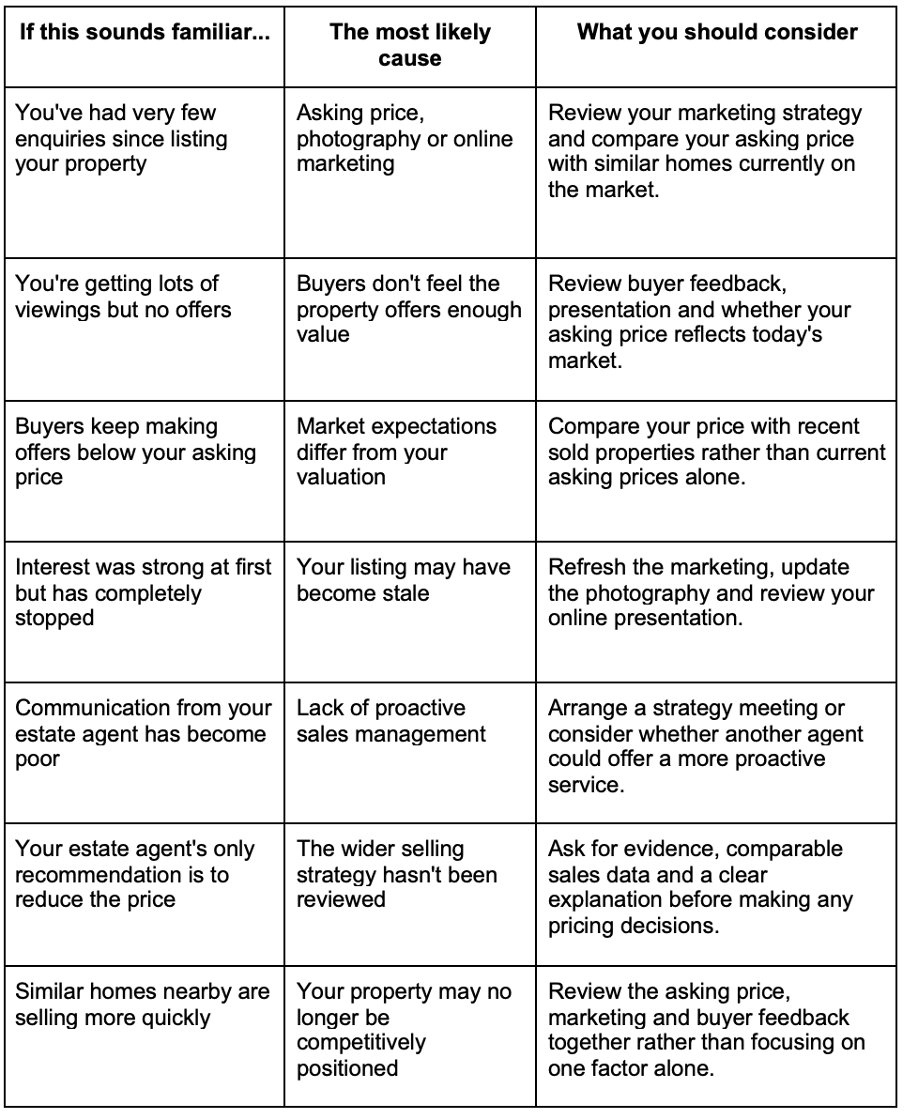
The most successful property sales rarely come down to one single decision. More often, they're the result of several small improvements working together, whether that's refining the asking price, improving the presentation, refreshing the marketing or ensuring buyers have all the information they need to make an informed decision.
The important thing is not to panic. A property that's been on the market for longer than expected doesn't automatically mean something is wrong. It simply means it's time to take an objective look at what's happening and adjust your strategy accordingly.
Selling Your Home in Hull, Beverley or East Yorkshire?
If your property isn't attracting the interest you expected, it doesn't automatically mean you need to accept a lower price or start your sale from scratch. Sometimes, a fresh perspective is all that's needed.
At Beercocks, we believe every property deserves an individual strategy. Rather than recommending the same solution for every seller, we take the time to understand what's happening, review the local market, analyse buyer feedback and identify the factors that may be preventing your home from selling.
Whether you're marketing your property for the first time or you're considering a change after an unsuccessful sale, our experienced team can provide honest, evidence-based advice to help you move forward with confidence.
If you'd like to discuss your current sale or arrange a free, no-obligation property valuation, get in touch with your local Beercocks branch. We'll help you understand what's really stopping your home from selling and what you can do about it.
Frequently Asked Questions
Q: How long should it take to sell a house?
A: Every property and every local market is different, so there's no guaranteed timescale. Factors such as location, asking price, buyer demand and the condition of the property all influence how quickly a home sells. If your property has been on the market for several months with little interest, it's worth reviewing your pricing, marketing strategy and buyer feedback before making any significant changes.
Q: Should I reduce my asking price if my house isn't selling?
A: Not necessarily.
A price reduction may be the right decision if evidence suggests your home is overpriced, but it shouldn't be the automatic response. It's important to understand why your property isn't attracting buyers first. Poor marketing, limited exposure, presentation or changing market conditions can all affect interest without the asking price being the main issue.
Q: Is it worth changing estate agents?
A: Sometimes, yes.
If your estate agent communicates regularly, reviews your marketing, provides detailed buyer feedback and can justify their recommendations using current market evidence, changing agents may not improve the outcome.
However, if communication has broken down, marketing hasn't evolved since launch or you're receiving little support throughout the selling process, it may be worth speaking to another local estate agent for a fresh perspective.
Q: Why am I getting viewings but no offers?
A: This usually suggests buyers like your property's location or online presentation enough to arrange a viewing, but something is stopping them from making an offer.
Common reasons include:
● The asking price doesn't reflect buyer expectations.
● The property doesn't compare favourably with similar homes.
● Presentation could be improved.
● Buyers have concerns following the viewing.
Detailed feedback from viewings should help identify any recurring themes.
Q: Why isn't anyone booking a viewing?
A: If your property isn't attracting viewings, buyers are often deciding against it before they've even visited.
This can be influenced by:
● Asking price.
● Photography.
● Property description.
● Competition from similar homes.
● Overall marketing strategy.
A review of your online listing and local market position is usually the best place to start.